
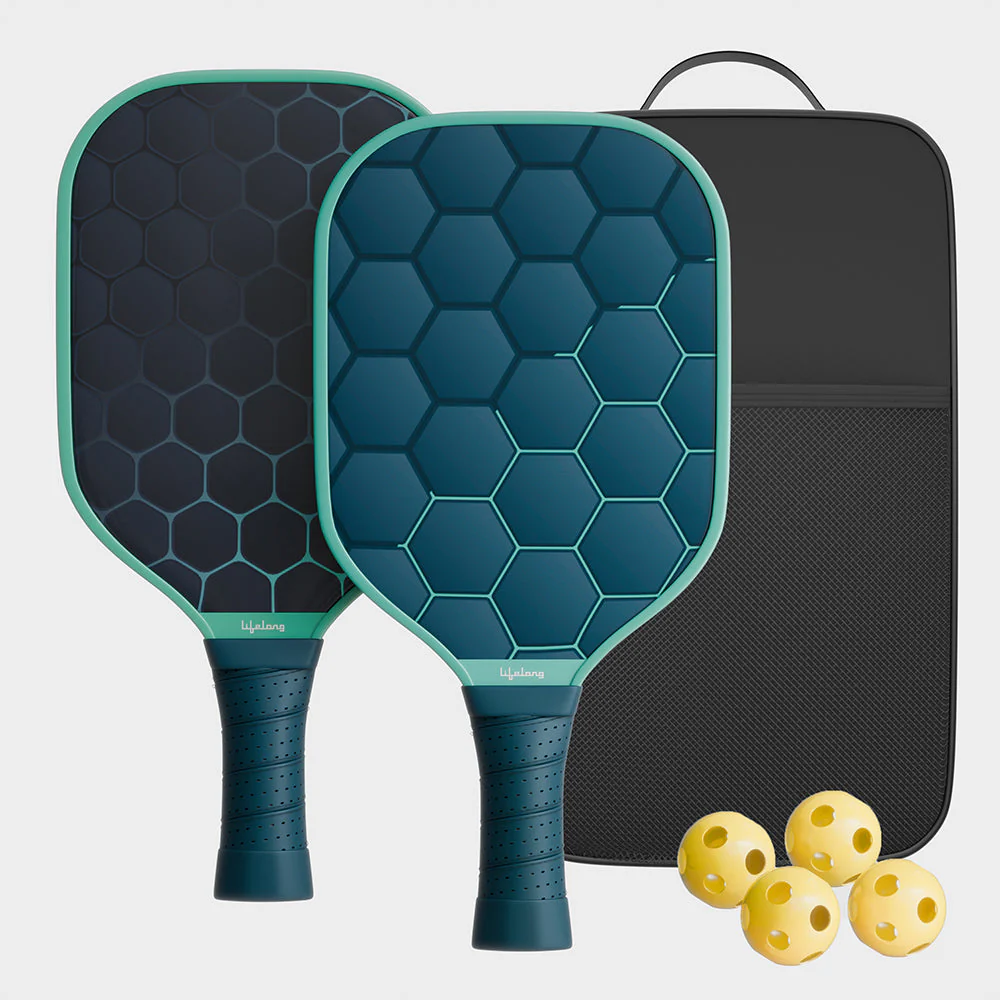
Pickle ball looks simple from the outside. Small court. Lightweight paddle. Plastic ball with holes. Then you step in. Suddenly touch matters. Control matters. Reaction time shrinks. And the racket in your hand decides whether you defend cleanly or dump the ball into the net.
If you are choosing equipment for pickle ball, do not start with color. Start with performance features. The right pickleball racket does not just feel good. It responds correctly under pressure.
Why Racket Features Matter in Pickle Ball
Pickle ball is built on short rallies, quick resets, and soft control near the kitchen line. Unlike tennis, raw power rarely dominates.
Your racket influences ball control, shot consistency, spin generation, reaction speed, and even arm fatigue. Small equipment differences become obvious after extended matches.
Weight: Control vs Power Balance
Racket weight changes everything.
Lightweight paddles under 7.5 ounces improve reaction time and net speed. Midweight paddles balance power and control and suit most players. Heavier paddles generate more power but may increase fatigue during long sessions.
If you are new to pickle ball, balanced weight is the safest starting point.
Core Material: The Hidden Performance Factor
Most paddles use polymer honeycomb, Nomex, or aluminum cores.
Polymer cores offer softer feel and better vibration control. Nomex cores feel firmer and produce more pop. Aluminum cores provide controlled touch but less power.
For most players, polymer remains the most versatile option.
Surface Material and Spin Potential
The paddle face affects ball grip.
Graphite faces are lightweight and precise. Composite surfaces add texture and enhance spin control.
If your game relies on drops and controlled spin, textured surfaces provide advantage. Flat hitters may prefer smoother response.
Grip Size and Comfort
Grip size affects endurance.
Too small increases wrist strain. Too large reduces maneuverability. Your fingers should wrap comfortably with slight space between palm and fingertips.
Long rallies expose poor grip choices quickly.
Paddle Shape and Sweet Spot
Standard shapes offer balanced control. Elongated paddles increase reach but slightly reduce sweet spot width. Wider paddles improve forgiveness for beginners.
Sweet spot consistency often matters more than extended reach.
Edge Guard and Durability
Pickle ball involves low contact and occasional surface scrapes. A protective edge guard prevents chipping. Edgeless designs feel sleeker but sacrifice protection.
Frequent outdoor players should prioritise durability.
Vibration Control and Arm Protection
Repeated impact stresses the elbow. Polymer cores and cushioned grips reduce vibration transfer.
Comfort today determines recovery tomorrow.
Indoor vs Outdoor Play Considerations
Outdoor pickle ball faces wind and harder surfaces. Stable paddles with controlled weight perform better outdoors.
Indoor play favors quicker handling and lighter builds.
Match your paddle to where you compete most often.
Pickle Ball Racket Buying Checklist for Players
Before purchasing, review this performance checklist.
| Feature | What to Check | Why It Matters | Best For |
| Weight | 7.3 – 8.4 oz midweight range | Balances control and power | Beginners to Intermediate |
| Core Material | Polymer honeycomb preferred | Better vibration control | All-round players |
| Surface Texture | Textured composite for spin | Improves ball grip | Spin-based play |
| Grip Size | Secure wrap with slight palm gap | Reduces wrist fatigue | Long matches |
| Paddle Shape | Standard for balance | Maintains sweet spot | Most players |
| Sweet Spot | Consistent center response | Minimizes mishits | Beginners |
| Edge Guard | Reinforced protective edge | Prevents damage | Outdoor players |
| Vibration Dampening | Cushioned grip + soft core | Protects elbow | Frequent players |
| Indoor/Outdoor Suitability | Stable build for wind | Surface performance | Environment-specific |
| Durability | Strong face bonding | Longer paddle lifespan | Competitive use |
Ask yourself before buying:
- Do I prioritise control or power?
- Do I play more indoor or outdoor pickle ball?
- Do I feel arm fatigue after matches?
- Am I developing fundamentals or refining advanced tactics?
Let answers guide selection, not marketing.
Frequently Asked Questions
1. What weight pickleball racket is best for beginners?
Midweight paddles provide the best balance between control and power.
2. Do textured paddles increase spin?
Yes. Textured composite faces improve ball grip and spin potential.
3. How long does a pickleball racket last?
With consistent play, most paddles last 1 to 2 years depending on surface and frequency.
Conclusion
Pickle ball rewards precision and patience. The right racket enhances consistency, reduces fatigue, and improves shot control. Weight, core material, surface texture, grip size, and durability all influence match performance. Choose based on playing style and environment. Subtle equipment decisions produce steady results over time.
In pickle ball, control wins more points than raw force.