
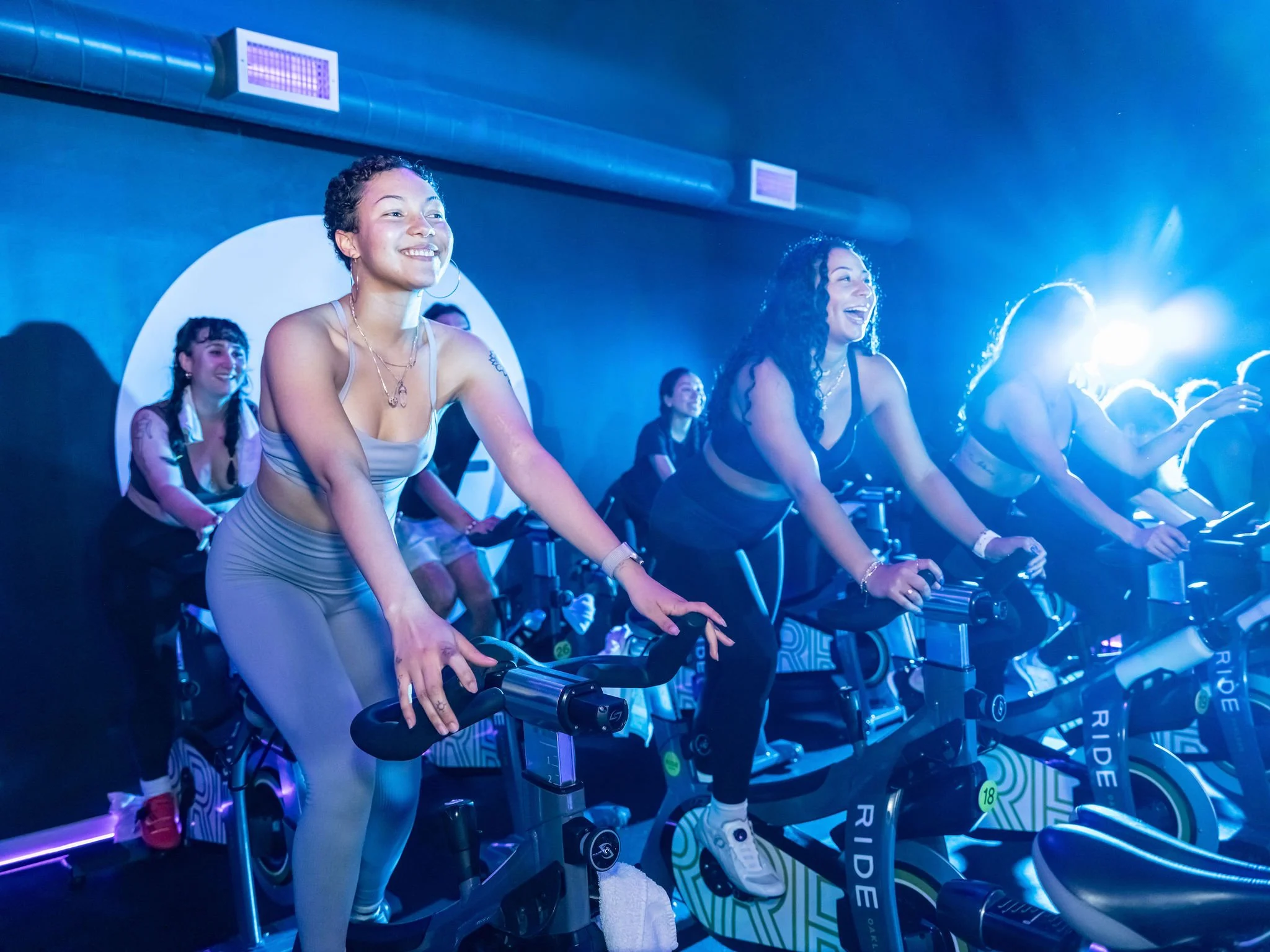
Running and court sports require repeated acceleration, deceleration and rapid force production. Indoor cycling can improve conditioning without adding the same impact, but poorly placed high-volume sessions may still reduce leg freshness and explosive performance.
An indoor spin class should therefore have a defined role within the athlete’s week. It can support aerobic capacity and recovery between efforts without becoming another competing source of lower-body fatigue.
Understand the Interference Problem
Endurance and power training can coexist, but their volume, intensity and timing influence the outcome. Excessive conditioning may reduce the quality of sprint, jump and strength sessions.
The issue is not that cycling automatically destroys power. The problem occurs when demanding sessions are added without adjusting the rest of the programme.
Total workload matters more than the name of the activity. A high-resistance class can create substantial leg fatigue even though it is low impact.
Define the Sport Priority
Field and court performance should determine the training hierarchy. Speed, agility, technical practice and strength sessions usually require freshness because their quality declines when fatigue is high.
Cycling should fill a specific conditioning gap. It may provide aerobic work, controlled intervals or lower-impact exercise during periods when running volume is already high.
If the sport session is the priority, the spin class should not repeatedly compromise it. Conditioning supports performance only when the main skill remains protected.
Place Cycling Away From Power Sessions
A demanding class immediately before sprint or jump training may reduce force production. The athlete can still complete the session, but movement speed and technical quality may decline.
Whenever possible, place higher-intensity cycling after a sport or power session rather than before it. This concentrates demanding work and preserves clearer recovery days.
If sessions must occur on consecutive days, keep the earlier cycling session moderate. Schedule design should reflect the importance of the following workout.
Use Moderate Cycling for Aerobic Development
Steady cycling can improve aerobic capacity with less impact than additional running. This may help athletes recover between repeated efforts during sport.
The resistance should remain purposeful but sustainable. The rider should finish with enough energy to complete the next planned training session.
Moderate work may feel less sport-specific than intense intervals, yet it can address conditioning without reproducing the mechanical stress already present in field practice.
Limit Heavy Grinding
Very high resistance at low cadence creates substantial local muscular demand. Frequent grinding intervals may leave the quadriceps fatigued for sprinting and jumping.
Athletes already completing heavy squats or other strength work should be particularly careful. Cycling load adds to the same recovery budget even when the movement is different.
Use heavy climbs selectively. They should serve a programme objective rather than being included because the class format encourages maximal resistance.
Use Intervals That Match the Need
Short cycling sprints can train rapid effort, while longer intervals develop sustained high-intensity capacity. Neither should be selected solely because it feels hard.
An athlete who already performs repeated sprints during practice may benefit more from controlled aerobic work. Another athlete with limited conditioning exposure may need structured intervals.
The programme should address what the sport schedule lacks. Duplicating existing demands adds fatigue without necessarily adding adaptation.
Preserve High-Speed Intent
Power training requires force to be produced quickly. Cycling cannot fully replace sprinting, jumping or sport-specific movement because the bike is fixed and does not involve ground contact in the same way.
Athletes should retain direct exposure to their sport’s high-speed actions. Indoor cycling is supplementary conditioning, not a complete substitute.
During busy periods, reduce cycling before removing the most specific power work. Specificity should guide which training element is protected.
Monitor Leg Freshness
Useful indicators include jump quality, sprint times, bar speed and subjective leg heaviness. A consistent decline after cycling suggests that the dose or placement needs adjustment.
One tired session is not enough to redesign the programme. Look for repeated patterns under similar conditions.
Members using TFX Singapore can record class intensity alongside field and strength performance. This connects studio work with the outcomes it is intended to support.
Reduce Impact During Congested Weeks
Competition periods may already contain substantial running and change-of-direction stress. Cycling can maintain conditioning while reducing additional impact.
This does not make every cycling session easy. The cardiovascular demand can remain meaningful while mechanical loading differs from running.
The athlete should still account for muscular fatigue. Low impact does not mean zero recovery cost.
Coordinate With Strength Training
Heavy lower-body strength work, sport practice and spin classes all challenge the legs. Placing them randomly can create several consecutive high-load days.
A useful weekly structure may cluster demanding sessions and protect recovery windows. Alternatively, moderate cycling can be placed after upper-body strength work.
The exact structure depends on competition timing and training experience. The central principle is that the sessions should not unknowingly compete.
Use Recovery Rides Carefully
An easy ride may increase movement without creating substantial additional stress. However, a group class can become more intense than planned due to music, coaching and competitive energy.
Athletes intending a recovery session must be willing to limit resistance and ignore leaderboard pressure. If the class format makes restraint difficult, another recovery option may be better.
Recovery is defined by the physiological cost, not the activity label. The athlete should feel better prepared afterward, not depleted.
Adjust During Competition Periods
Conditioning volume may need to fall when matches or tournaments become frequent. Fitness is then maintained with smaller, carefully placed doses.
Spin classes can remain useful, but their hardest intervals may be reduced. The objective shifts from building maximum capacity to supporting performance and recovery.
After the competition period, cycling volume can increase gradually. Programme phases should reflect changing sport demands.
Fuel the Combined Workload
Athletes combining sport, strength and cycling need enough energy to support the total programme. Persistent under-fuelling can make every session appear poorly designed.
Carbohydrate supports demanding work, while protein contributes to repair. Hydration is particularly relevant in Singapore when outdoor practice precedes indoor training.
Nutrition should match the athlete’s goals and health requirements. Clinical or highly individual needs require qualified professional guidance.
Evaluate Whether Cycling Is Helping
The question is not whether spin performance improves in isolation. The athlete should examine whether sport conditioning, repeated-effort recovery and training availability improve.
If cycling output rises while sprint and jump performance repeatedly decline, the balance may be wrong. The supplementary activity has begun to compete with the primary objective.
Adjust frequency, intensity or placement before removing cycling completely. Often, a smaller dose preserves the conditioning benefit.
Make Spin Serve the Sport
Indoor cycling can build aerobic fitness and repeatable effort without adding another full running session. This makes it valuable for athletes managing impact and congested schedules.
The benefit depends on restraint and timing. Heavy climbs, maximal intervals and frequent classes should be used only when they support the current phase.
When cycling is programmed around sport practice, strength work and competition, it expands conditioning without replacing specificity. The athlete gains fitness while keeping the speed and power that matter on the field or court.